


Beirut, March 9, 2026 — Israel has displaced more than half a million Lebanese residents from South Lebanon, Beirut, and the Beqaa in yet another round of indiscriminate bombing of the country, provoking another severe humanitarian crisis.
Meanwhile, the impact of the U.S.–Israeli war on Iran reverberates across the Gulf, where multiple U.S. military bases in capital cities were directly hit by Iranian missiles.
This time around, a crisis has hit the entirety of the region, posing new digital threats to residents of the affected countries.
How has the war unfolded on the digital front during the first week of the regional crisis?
- Amazon Web Services (AWS) data centers hit by Iranian missiles in the Gulf
Earlier last week, Amazon reported that three of its AWS data centers in the United Arab Emirates (UAE) and in Bahrain were hit by Iranian strikes, causing outages to many digital services including banking, e-commerce, and other consumer services.
“Amazon and other data center infrastructure companies cannot simultaneously serve as the backbone of a region’s digital economy and as a military enabler, and expect that distinction to hold during a war,” said Ragheb Ghandour, Cybersecurity Consultant at SMEX in a recent comment about the war.
Data centers have become a strategic asset globally and across the Arab region. These facilities host the digital infrastructure behind major online platforms, corporate services, and, in some cases, government systems.
“What we are witnessing is the inevitable consequence of allowing military and civilian digital infrastructure to become inseparable,” added Ghandour.
Ghandour had previously discussed the strategic importance and the growing presence of data centers in a session hosted on February 24 by our partners at the Arab Reform Initiative (ARI). You can rewatch the session here.
Beyond pure technological concerns, data centers and web service platforms like AWS and Google have also had a major military role, specifically in Israel’s genocide on Palestine. In 2025, a groundbreaking report by UN Special Rapporteur Fransesca Albanese accused major tech companies of abetting the Israeli regime’s genocide of Gaza.
This report, alongside other revelations affirming the involvement of major tech companies in Israel’s genocide reveals broader concerns about the militarization of technology and its use in illegal contexts.
- Suspicious ads in Lebanon attempt to incite strife
AI-generated sponsored ads depicting and posing as major Lebanese officials like Speaker of Parliament Nabih Berri, Prime Minister Nawaf Salam, and President Joseph Aoun have been surfacing on Lebanese residents’ timeline.
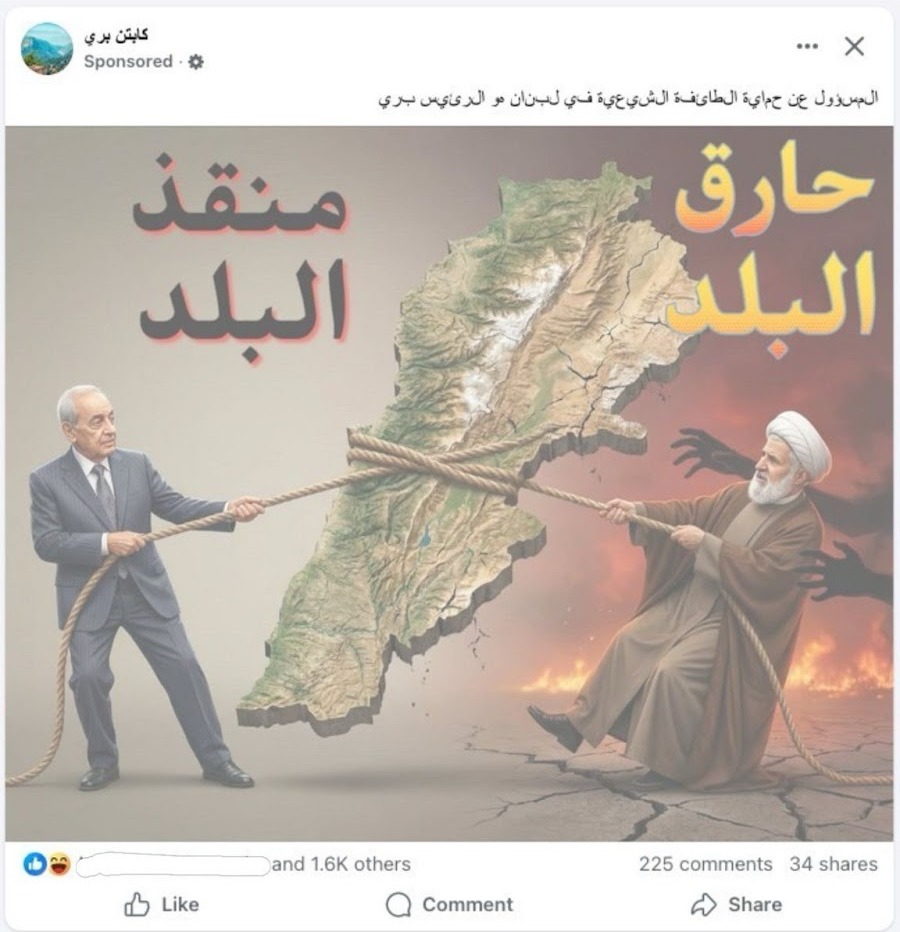
Image 1. Ad showing Speaker of Parliament Berri and Hezbollah Secretary General Naim Kassem engaged in a tug of war with Lebanon’s map, respectively qualified as “savior of the country” and “burned the country.”
While it is unclear who exactly is behind these ads, they have consistently called for neutrality and peace with Israel—an illegal act as per the Lebanese legal framework.
“These ads are dangerous because they are not only political— they are actively attempting to hire people to commit security and military actions against their own country,” explained Abed Kataya, Media Program Manager at SMEX.
SMEX has also documented unknown surveys that were being disseminated, asking Lebanese people about their opinion on the war. Some of those surveys seemed to be fake; they may have used them to collect data while claiming they provide aid, adds Kataya.

Image 2. Another ad on a local news website showing Lebanon’s President, Prime Minister, and Speaker of Parliament. Text reads “Lebanon towards neutrality! At your service, Lebanon” alongside an arrow asking users to click for more. The hashtag says #MLGA (Make Lebanon Great Again) and “Lebanon does not want war.”
This is not the first time such ads appear on Lebanese people’s timelines. SMEX previously documented similar instances of online propaganda, including attempts directly from the Mossad to recruit spies and collaborators for Israeli intelligence agencies. These ads were prominent around the 2024 war but also continued throughout the rest of 2025.
SMEX previously found in a piece of research called “When Transparency Fails: Meta’s Political Ad Policy During Israel’s War on Gaza” that Meta has consistently favored Israeli propaganda ads to dominate over sponsored humanitarian aid seeking help for Palestinians in Gaza. After having raised this issue to Meta several times, the company refused to take them down under the guise that they do not infringe their community standards.
SMEX advises you to avoid interacting or spreading these ads. You can read more about the usage of these ads during war, shared by our Executive Director, Mohamad Najem.
- Iran imposes a nationwide internet shutdown during the war
Human Rights Watch, alongside other rights organizations, have called for the re-establishment of internet services in Iran following a shutdown of nearly all internet communications during the war.
The Iranian government has used this shutdown as a tactic during the U.S-Israeli war on Iran, with only government-approved websites and services available to citizens through intranet.
However, internet shutdowns, especially during conflicts and war, limits access to essential communications, including those that allow residents to communicate with each other and locate life-saving resources like shelters. Internet shutdowns also hinder the essential work of journalists documenting war crimes.
- Forcibly displaced people in Lebanon could risk fraud or scams
As Israel continues to hit residential areas in Lebanon, people are forced to flee their houses in search for a safer place or shelter. SMEX warns that in times of crisis, scammers may seize the opportunity to extort money from vulnerable people.
To help you stay safe both physically and online during the war, we’ve put together a few simple tips to keep you protected. Take a moment to read them here.
Lebanese residents had also reported having received threatening calls and evacuation notices. SMEX had written on how to deal with these messages while preserving your digital privacy and security. You can read them through our website.
- Gulf countries take legal measures to “curb misinformation and panic”
In an attempt to curb misinformation and misleading news during the US-Israeli-Iranian war affecting Gulf countries, GCC governments have taken legal measures to limit their spread and mitigate their impact.
The UAE’s Attorney-General Dr. Hamad Saif Al Shamsi warned residents that photographing, publishing, and sharing images of attack sites may result in misinformation and exaggeration of the country’s situation, inciting panic amongst residents. Al Shamsi also advised against fabricating AI-generated images or content, which constitutes a criminal offense under the UAE’s current legal framework.
In a similar manner, Qatar has arrested 313 individuals accused of allegedly spreading misinformation on the Iranian attacks. Bahrain and Kuwait have taken similar measures as well; for reasons spanning the “spread of misinformation” and “mocking the situation.”
However, SMEX warns that measures like these may have negative repercussions, leading to a crackdown on freedom of expression and journalism, especially under authoritarian regimes like the GCC, which have historically abused cybercrime laws and legal frameworks to detain individuals having criticized the government or its actions.