

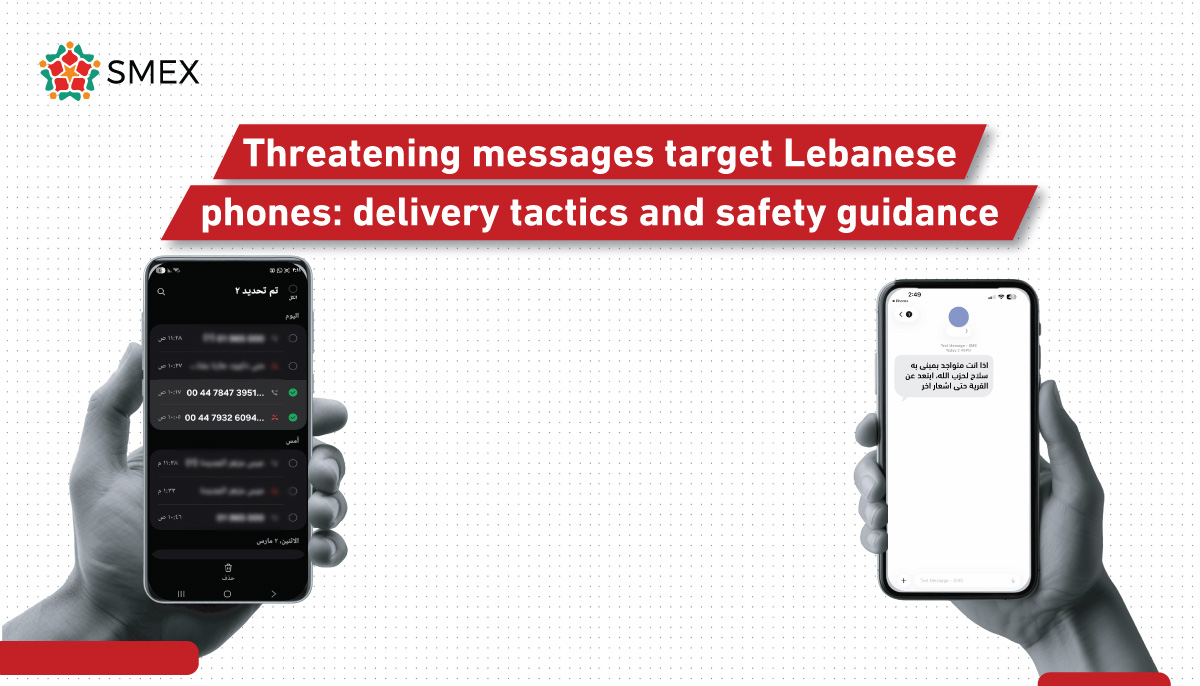
With the recent escalation of Israel’s war, Lebanon’s residents have reported receiving threatening phone calls and text messages asking them to evacuate the buildings they are in. These messages have been reaching a large number of residents in a semi-random manner, an occurrence which was observed in the 2024 war. These threats have caused widespread panic among residents due to the fear inflicted by Israel’s consistent targeting of residential areas.
Here are all the possible methods through which these messages and phone calls might operate.
- User data in Lebanon is readily available: It can easily be purchased for advertising purposes. Personal data is also exposed through traffic management records and public voter lists. You may receive a threatening message because your number was listed in an area that is currently threatened.
- Caller ID Spoofing: Some calls appear to come from Lebanese numbers when in reality they are foreign, using a technique that disguises their true origin.
- International telecom routing: Pre-recorded voice messages are sent via international telecom companies. The system in Lebanon cannot effectively recognize them as Israeli calls, as they can appear as calls from non-hostile countries, Imad Kreidieh, head of Lebanon’s Ogero, explained to SMEX in 2024.
- WhatsApp/Telegram: Fake accounts are created using phone lines which are purchased online for the purpose of sending threatening messages, using random number generators targeting specific regions.
- Signal interception via drones: Israeli drones can intercept signals between antennas and connected phones, collecting all numbers in a specific range. They can later use this data to call residents or send threatening messages.
Here are some practical tips to help you maintain your safety:
If you receive a threatening call or SMS:
- Remain calm.
- Do not spread the information widely before it is verified, because it can cause unnecessary panic.
- Contact security agencies and officials to verify the threat. Here is a link to all the numbers and resources provided by the Lebanese government.
- Assess your situation, and determine the appropriate course of action for you and your family.
While on the call:
- Do not return calls or reply to SMS messages from suspicious or unknown numbers.
- Avoid sending SMS messages to suspicious numbers.
- If you answer a suspicious call, do not press any keypad numbers.
- Try to record the conversation to verify it with officials.
- Report all suspicious calls or SMS to the security authorities.
- Reach out to SMEX’s Digital Safety Helpdesk via Whatsapp/Signal on +961 81 633 133 for help or guidance. The Helpdesk is capable of addressing online threats like account hacking, wrongful post removal, and restrictions on social media. It also provides support for journalists and activists under digital threat.