

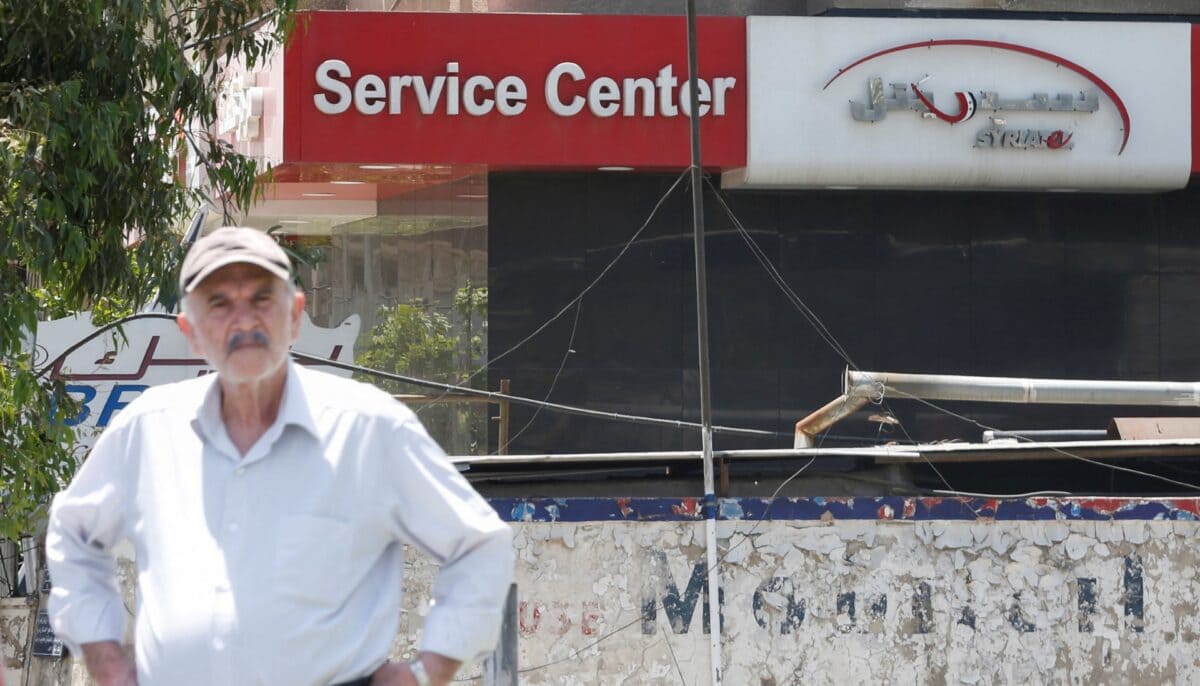
Telecommunication prices in Syria have increased nearly a thousandfold, drawing public attention and concern. However, the Syrian Ministry of Telecommunications tried to distance itself from the decision in an attempt to absorb the public anger.
Questions have multiplied about the legality of this move and its compatibility with Syria’s current economic and living standards. Others have also questioned whether it would be possible to legally hold telecom companies accountable to prompt them to reverse their decisions.
According to current available data, the price of the daily package rose from 500 Syrian pounds (USD 0.04) to 6,000 pounds (USD 0.54), while the weekly package increased from 2,000 pounds (USD 0.18) to 12,000 pounds (USD 1.08), signifying a 500% increase. The monthly package rose by 200%, and the three-month package reached 300,000 Syrian pounds (USD 27).
The ministry disclaims responsibility
The scale of this decision and the negative reactions on social media put the Syrian Ministry of Communications and Information Technology in a difficult position, prompting it to deny the increase and claim that “the two companies are private and financially and administratively independent.”
The ministry also asked the companies to provide a “formal and detailed explanation clarifying the reasons for offering new packages at different prices,” linking this explanation to “the need to improve service within sixty days through geographic plans, a clear timeline, and measurable performance indicators,” in an attempt to calm public anger.
Syriatel, one of Syria’s two telecom companies, also tried to mitigate public backlash by issuing a statement two days later. In it, the company expressed their understanding of the pressures faced by their subscribers and outlined measures, including:
“Rehabilitating hundreds of damaged towers, adding new towers with more advanced technologies, launching more organized packages, and offering discounts of up to 25% for specific groups, including the public sector, students, people with disabilities, and journalists.”
These reassurances did not satisfy many people, especially given the reduction in the number of packages from 200 to just 15.
No proper oversight over telecom companies
In reality, the Syrian Telecommunications Law and the regulations of the Telecommunications Regulatory Authority both contradict the Ministry of Communications’ claim that the two companies are “independent.”
The law grants the authority, in Article 5, the right to “price services,” “promote fair competition,” and “prevent any person from abusing a dominant position in the market.”
Article 42 also mandates that “licensees with a dominant market position adhere to the upper and lower price limits approved by the authority.”
There is little doubt that the companies’ monopoly places them in a “dominant market position.” Under Article 4 of the law, any increase in telecom prices requires approval from the Telecommunications Regulatory Authority, which reports directly to the minister.
This raises a central question: Is the Syrian Ministry of Communications failing to exercise its regulatory authority over the two companies?
A widening digital divide
The new prices have created a large digital divide, especially when comparing the average Syrian citizen’s income with current internet prices.
“An employee’s salary is about 400,000 Syrian pounds (around USD 40), a clear illustration of Syrians’ limited financial capacity,” says independent journalist Sally Ali in an interview with SMEX. Ali noted that “the most affected group is university students who move to housing next to their universities, where home internet service is unavailable, making mobile internet far more essential.”
At the same time, “there is a group of citizens who used to activate the internet for a week whenever financial circumstances allowed, but they are no longer able to do so,” says Zeinab Jibli, a services company employee, to SMEX.
Jibli explains the differences between the packages, noting that “previously there were many options, such as a 3-hour package split into three time periods during the day, with different prices for morning, noon, and evening, costing about 1,500 Syrian pounds (USD 0.10).”
Today, under the new decision, “this package was canceled and replaced with another which offers three hours for 3,000 Syrian pounds (USD 0.30).” Among other packages was the “Sabaya” package, which included 300 call minutes and 500 SMS messages for a month at about 12,000 Syrian pounds (USD 1). Now, the minimum monthly package costs 180,000 Syrian pounds (around USD 18).
As for weekly packages, Rahaf Hamwi—who returned to Syria about a year ago—points to a problem with the complexity of the subscription mechanism. She explains that she subscribes to a weekly service for 30,000 Syrian pounds (around USD 2.7) that renews automatically, but it rarely lasts a full week, forcing her to renew the subscription more frequently.
The interruption of home internet and its high cost create an additional problem. Jibli faced a home internet outage about four months ago due to a “cable theft.” To avoid subscribing to packages for all family members, “we subscribed to wireless internet for 100,000 Syrian pounds per month (around USD 10),” she adds, noting that “this service is provided through private companies, where one person subscribes and is allowed to grant five lines and rent them out to neighboring homes.”
Remote workers also suffer from high internet prices and poor service, as is the case for Nouwara Malham, who works remotely from Syria with a Dubai-based business consulting company and now pays double her previous amount—about 400,000 Syrian pounds (around USD 36) per month.
“This price increase has not led to an improvement in service quality; the equation has become a high price for poor service,” Malham explains to SMEX.
The decision by Syria’s two telecom companies has only added to the many burdens on its residents, who still face precarious living conditions which prevent them from accessing poor internet services—deepening the digital divide furthermore.
Internet and communications should be treated as a basic right for everyone, not merely a commercial product, especially in crisis-torn countries like Syria. Will the Syrian Ministry of Communications reconsider its approach?
Featured Image from AFP