

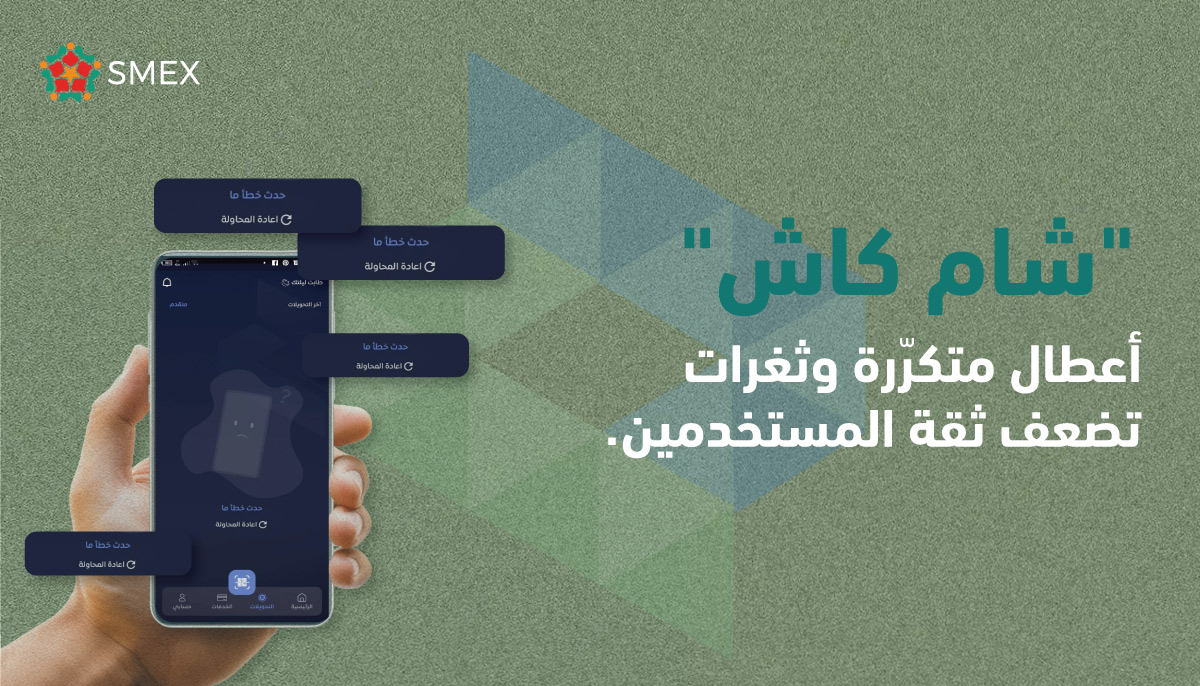
The “Sham Cash” app in Syria has come back under scrutiny after a widespread outage left users unable to access funds for hours, renewing concerns over persistent flaws in the digital wallet system.
Sham Cash functions as an electronic wallet used for money transfers and the disbursement of public sector salaries. Today, it continues to suffer from structural issues that SMEX previously highlighted.
As the number of complaints rose, Syrian engineer and programmer Anas Al-Saoud, who resides in Germany, initiated the “Sham Cash Victims” group on Facebook after having received messages from users affected by the app.
According to Al-Saoud, the group’s goal is to gather and organize those affected by Sham Cash, defend their rights, and recover their funds through legal means.
Suspension of the App
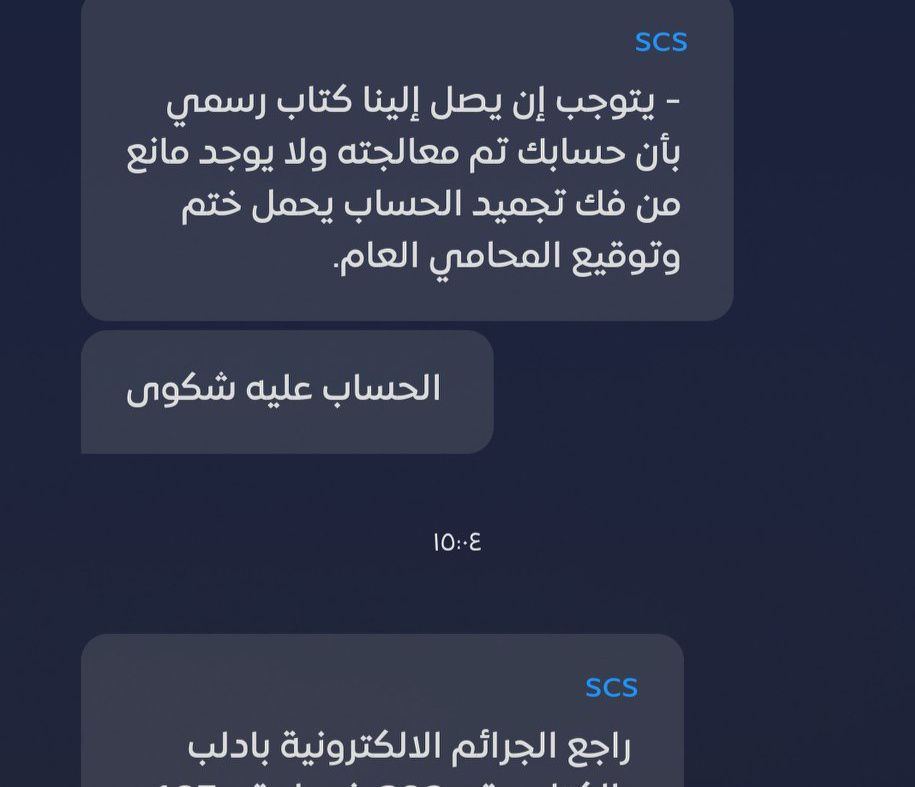
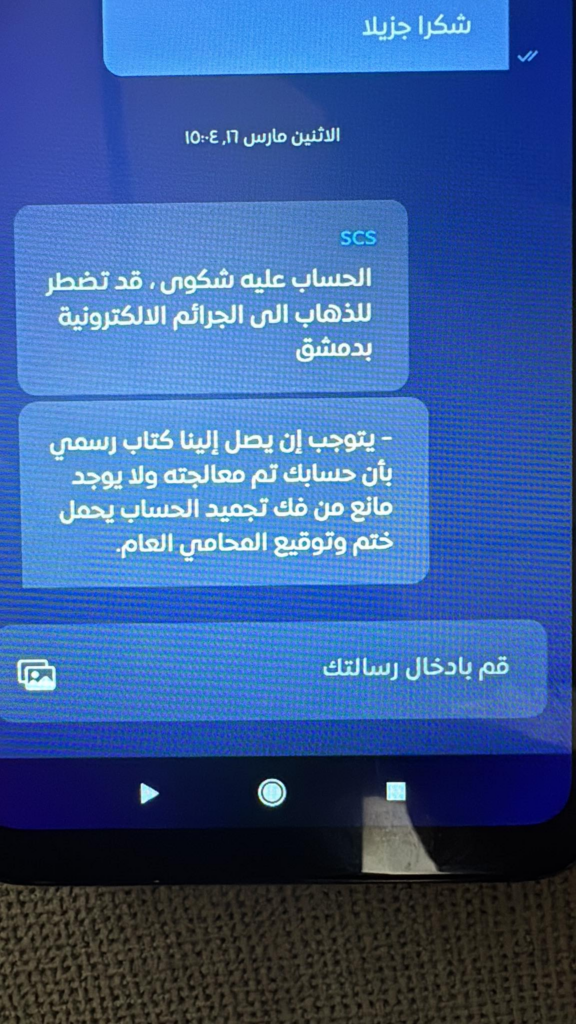
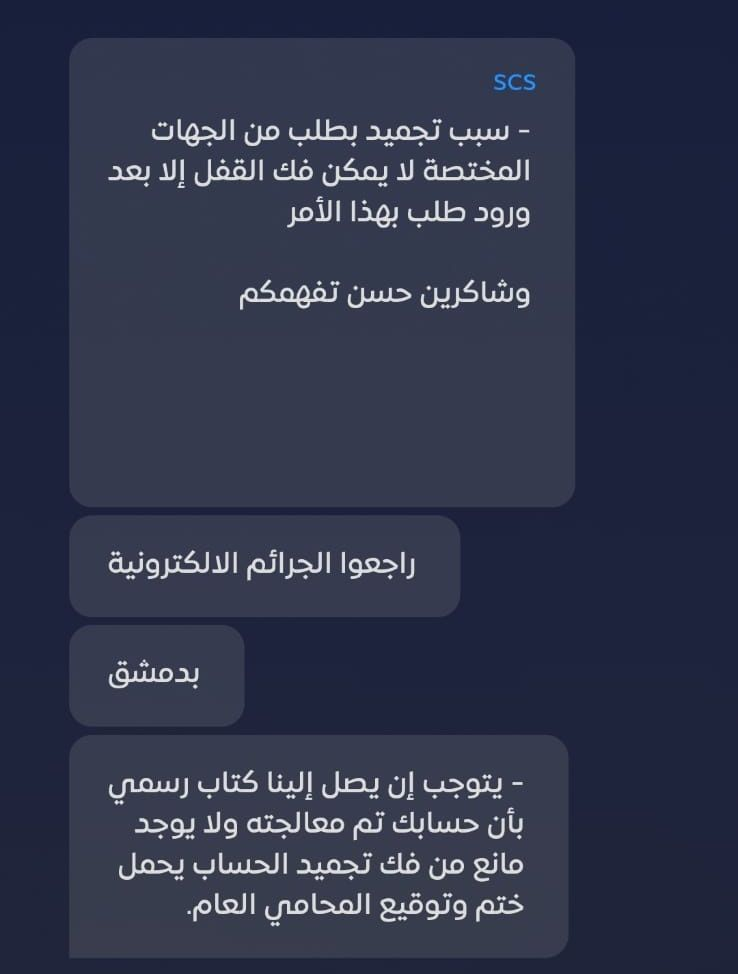
A number of Sham Cash app users have reported a sudden freezing on their accounts and a lack of cooperation from the app’s support team. Some were also asked to visit the company’s headquarters in the Idlib Governorate, burdening those who live far with long trips. Other users have also reported falling victim to financial scams, among other issues.
Al-Saoud added the Sham Cash service to the global “Trustpilot” website, a trusted international platform used by millions of users worldwide to read and write reviews. They also invited anyone with experience using the app, whether good or bad, to visit the site and describe their experience.
Many responded to the call, and a number of users posted reviews and shared negative experiences with the app, accusing it of fraud, freezing user accounts without clear reasons, a lack of transparency in platform management, poor technical support, and recurring issues with withdrawals, in addition to concerns regarding digital security and data privacy, among other things.
Al-Saoud also sent a report to the hosting company of Sham Cash’s domain, Hostinger.
The report included a description of the app and was accompanied by copies of negative reviews posted on Trustpilot. After reviewing the report, the company proceeded to suspend the domain, cutting off the connection between the app and the servers, causing the app to stop working on March 8.
Within a few hours, the management of the “Sham Cash” app announced in a statement that the app was back to normal, explaining that what had happened was “a glitch in the app that has been resolved,” and confirming that “all users’ accounts are completely safe and secure.”
Sham Cash’s managing director, Ahmed Al-Kilani, also stated in a press release that the app is “a trusted government institution that operates in close coordination with the Central Bank, and the funds are held by the Central Bank.”
SMEX’s Analysis of Sham Cash
In April 2025, SMEX published a forensic report highlighting several issues with the app. According to its analysis, the app can only be downloaded through the “Sham Cash” website and is not available on Android or iOS app stores, raising concerns about its trustworthiness.
The app has also experienced recurring technical problems that have repeatedly prevented users from accessing it.
The report further points to a lack of transparency, noting the absence of clear information about the company behind the app or guarantees regarding the protection of user data, including personal, financial, and transaction records.
SMEX also highlighted the absence of a clear data policy outlining how data is stored, who is responsible for it, where it is kept, and whether it is shared with third parties such as government agencies, financial institutions, or analytics firms. In addition, the app’s terms of use do not align with basic privacy standards.
Based on these findings, SMEX’s forensic team advised against using the app, citing significant vulnerabilities and ambiguities that could expose users to data breaches and compromise their safety and privacy.
International Standards for Digital Wallets
There are international rules and standards that digital wallets must adhere to in order to ensure their operations are managed with high reliability and financial efficiency.
According to the SMEX’s policy team, these rules include a set of regulatory and legal controls that ensure operational safety and the protection of users and their data. The digital wallet must officially be registered with a competent regulatory authority in the country where it operates, ensuring it is subject to legal oversight and supervision.
The wallet must strictly adhere to Anti-Money Laundering (AML) standards and implement Know Your Customer (KYC) procedures, curbing illicit activities, including money laundering and terrorist financing, as well as combating financial fraud.
Finally, a clear and transparent policy must be established to protect user data, in which their rights and the mechanisms for handling their personal information are clearly defined.
According to SMEX, it must comply with applicable legislation regarding the protection of client funds, enhancing trust and ensuring the highest levels of financial security.
The disbursement of public sector employees’ salaries should not be conditional upon downloading the app until efforts are made to make it more secure and reliable in terms of user data privacy and encryption, and access to funds.